
 Standartlar
Leak Testing Methods: An Overview
What is Leak Testing?
Leak Testing, a prevalent NDT technique, identifies defects in materials causing leaks. The process capitalizes on the movement of elements from high to low pressure, using pressure to induce flow toward potential leaks while closely monitoring this flow. Leak Testing is not a one-size-fits-all process; its applications vary across industries. The Automotive Sector may focus on leak testing for fuel systems, while the medical device industry places a premium on ensuring the absence of leaks in life-critical equipment.
The effectiveness of a leak test heavily depends on the quality and appropriateness of the seals used. Choosing the right materials for seals is paramount for a successful test. Leak Testing is imperative when examining enclosed systems; its success is contingent on the object under scrutiny. Different materials respond diversely to the high pressures involved, leading inspectors to scrutinize for issues like holes, weak seals, cracks, or other imperfections. Industries spanning packaging, consumer goods, electronics, automotive, and medical devices commonly integrate leak testing into their maintenance protocols.
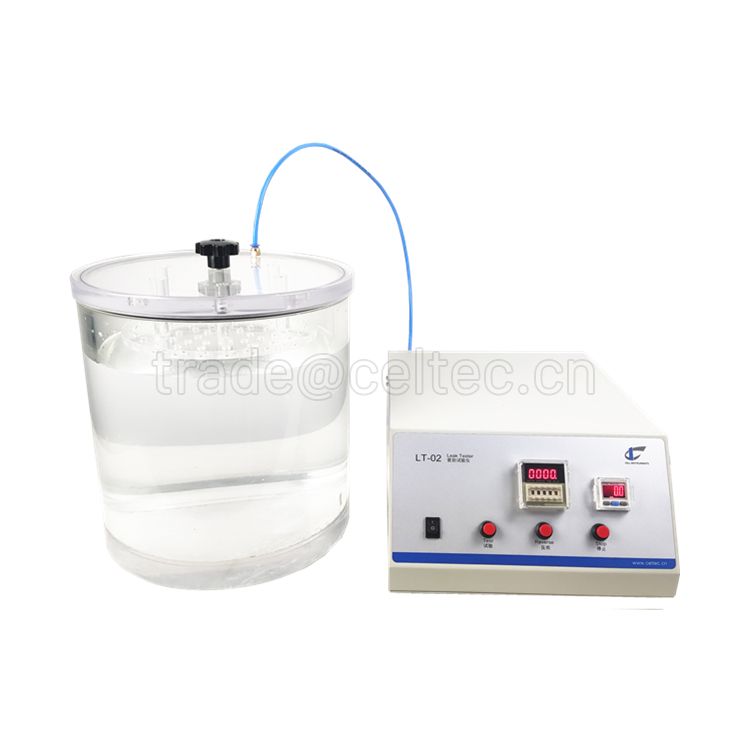
What are the Methods of Leak Testing?
Leak testing is a crucial aspect of the examination process, particularly in industries where the integrity of seals, devices, or packages is paramount. This process helps ensure that products meet quality standards and are safe for use by consumers. It also helps identify any potential defects or issues that could compromise the functionality of the product.
It encompasses a variety of methods falling under the category of non-destructive testing. Here are some of the common methods:
Burst Testing
Pressure Crack Testing
Chamber Testing
Pressure Decay Testing
Pressure/Vacuum Testing
Occlusion Testing
Vacuum Decay Testing
1. Burst Testing
Burst testing is a method where pressure is incrementally applied to a device until it ruptures. This can be conducted using NDT techniques or, if necessary, through destructive means to understand the limits of a device’s integrity.
2. Pressure Crack Testing
This method involves closely observing valves for signs of “weeping,” which indicates tiny cracks or leaks. Utilising a downstream sensor monitor enhances the precision of detecting such minute leaks, ensuring early identification and mitigation.
3. Chamber Testing
In chamber testing, sealed environments such as packages or devices are placed within a controlled chamber. By monitoring pressure differentials inside and outside these sealed units, defects leading to leaks can be identified accurately.
4. Pressure Decay Testing
This technique focuses on monitoring pressure changes within a sealed system under positive pressure conditions. Any deviation in pressure over time indicates potential leaks, allowing for timely intervention.
5. Pressure/Vacuum Testing
Pressurising both a test material and a reference volume, then comparing the pressure difference, is a highly effective method. Automated systems make this process efficient and reliable, with any variation indicating the presence of leaks.
6. Occlusion Testing
Occlusion testing is employed to detect obstructions within the gas flow path that could lead to leaks. By analysing the flow characteristics, any anomalies indicative of defects can be identified and rectified.
7. Vacuum Decay Testing
This method utilises pressure changes under negative pressure conditions to detect leaks. By subjecting the system to a vacuum, any increase in pressure signifies the presence of leaks, allowing for precise localisation and remediation.
Each of these methods offers distinct advantages and may be preferred, depending on the specific requirements of the application. By employing a combination of these techniques, industries can ensure the reliability and safety of their products and processes.
Key Considerations in Leak Testing
Leakage inspections require the input of pressure into an object to identify leaks, necessitating unique Leak Testing Considerations for this Non-destructive Testing method:
Acceptable Leak Rate
Inspectors must comprehend the acceptable leak rate for a material or system. While all leaks require attention, some might demand enhanced monitoring or immediate action. Various industries establish guidelines for acceptable leak rates.
Material Considerations
The material composition of an entity impacts the Leak Testing. If a substance is excessively brittle or malleable, pressure introduction can alter its shape, necessitating careful consideration during scheduling.
Manufacturing Considerations
The intended function of a part, system, or material influences leak testing. Materials may be designed to allow or prevent the passage of liquids, a factor crucial in leak testing.
Medium Considerations
The substance an object retains influences Leak Testing. Varying sizes of molecules and responses to pressure must be considered. Extreme pressure ranges can damage the object, while low ranges may yield inconclusive results.
Leak Testing Methods
Here are some of the most common leak test methods:
Burst. This leak test method uses either a destructive or a non-destructive test that ramps pressure in order to find the point at which the device will break open (i.e., burst).
Chamber. This leak test method is used to identify defects that are causing leaks in a sealed environment, like a device or package, that was not built with an opening to allow for the introduction of pressure for leak testing.
Pressure crack. This leak test method is used to identify “weeping” in valves with a downstream sensor monitor.
Pressure / vacuum. This leak test method uses the pressurization of a test object and a reference volume. If a leak is present, the difference between the two will decrease. (This process is fully automatic.)
Pressure decay. This leak test method uses the pressure change of an object or system under positive pressure to identify defects that are causing leaks.
Vacuum decay. This leak test method uses the pressure change of an object or system under negative pressure to identify defects that are causing leaks.
Occlusion. This leak test method identified obstructions in the flow path of a gas to identify defects that are causing leaks.
The leak test pressure limit for leak tests typically uses low pressure. Most codes for leak test pressure limits call for the pressure to be at least 15 psi or 25% of the design pressure (whichever pressure is less).
Leak Testing Standards and Codes
Leak testing is commonly used for code-based inspections, and there will be a leak testing standard (or standards) in most countries that use these kind of tests for inspections.
Here are some of the more widely used leak testing codes:
ASME (AMERICAN SOCIETY OF MECHANICAL ENGINEERS)
ASTM (American Society for Testing and Materials)
ISO (International Organization for Standardization)
How Leak Testing Works
Leak testing is a broad term that includes a multitude of technologies. For the purposes of this article, different leak test methods will be referenced but not described in full detail. This article defines the broad term leak test and takes a closer look at the pressure decay leak test method. Furthermore, this article will describe how a pressure decay test works, considerations for the pressure decay method, and how recent technological advancements have impacted manufacturing environments.
FAQs
1. What is the best method of leak checking?
A: Determining the best method depends on factors such as the object under scrutiny and the nature of potential leaks. Each method has its strengths. For instance, Pressure Decay Testing is effective for detecting defects causing leaks under positive pressure, while Vacuum Decay Testing excels under negative pressure.
2. What are the different types of leaks?
A: Leak types vary based on the nature of the defect. Common types include:
Holes
Weak Seals
Cracks
Other Imperfections
Understanding the specific defect is crucial in selecting the appropriate Leak Testing Method.
3. How do you measure leaks?
A. Leak Measurement involves assessing the rate at which a substance escapes. NDT Inspectors use tools and instruments like flow meters to quantify the leaks. The acceptable leak rate varies depending on the material or system being tested.
4. What tool is used to check for leaks?
A. Several tools are employed for leak checking, with the choice contingent on the testing method and the substance involved. Common tools include:
Mass Spectrometer Leak Detector
Flow Meters
Visual Inspection Devices
Pressure and Vacuum Gauges
The selection of the tool is integral to the accuracy and efficiency of the leak testing process.

 Türkçe
  English
  العربية
  Български
  Čeština
  Dansk
Dansk  Deutsch
  Ελληνικά
  Español
  Eesti
Eesti  Suomi
Suomi  Français
  Magyar
  Bahasa Indonesia
  Italiano
  日本語
日本語  한국어
한국어  Lietuvių kalba
  Latviešu valoda
  Norsk bokmål
  Nederlands
  Polski
  Português
  Română
  Русский
  Slovenčina
  Slovenščina
  Svenska
  Українська