
A Comprobador de compresión de cajas is an essential instrument for evaluating the compressive strength of packaging materials. It allows manufacturers to determine the durability and load-bearing capacity of corrugated boxes and shipping containers, ensuring safe product transport and storage. In this guide, we’ll explore how it works, its key applications, and its value in packaging quality control — with a focus on solutions from Cell Instruments.
What is a Box Compression Tester?
A Box Compression Tester (BCT) is a laboratory testing machine used to measure the compressive strength of various packaging boxes, including corrugated cartons and shipping containers. By applying controlled pressure, it identifies how much force a box can endure before collapsing. This test is vital for verifying packaging reliability across the supply chain and minimizing risks of product damage.
At Cell Instruments, we provide advanced box compression testing systems that help businesses evaluate packaging resilience under stacking and load conditions.
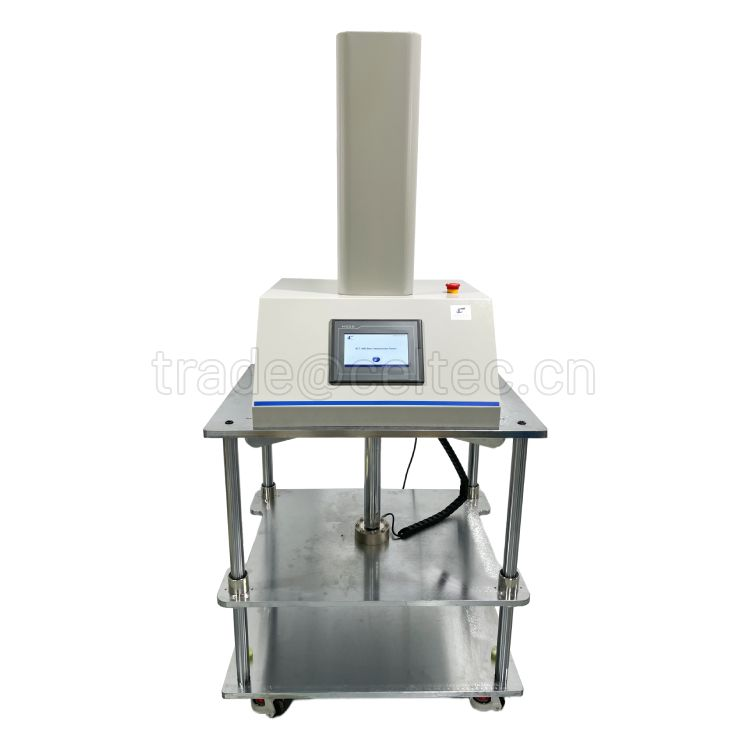
Box Compression Tester Structure
The tester comprises an upper compression plate that moves downward at a controlled rate and a stationary lower plate to hold the sample. A highly sensitive load sensor measures the force applied until the box deforms or collapses. Real-time data is displayed on a digital screen, delivering accurate and repeatable results.
Industries such as e-commerce, logistics, pharmaceuticals, and food packaging rely on this testing process to optimize packaging designs, select suitable materials, and reduce product loss.
Working Principle of a Box Compression Tester
The box compression test involves applying a steadily increasing compressive load on a packaging box until failure occurs. The lower plate remains fixed while the upper plate descends at a uniform speed. As the load builds, sensors continuously measure the resistance offered by the box, providing real-time data about its stacking strength and load-bearing capability.
The test follows standardized methodologies to maintain accuracy and consistency. It helps manufacturers determine whether packaging meets industry standards and safely withstands real-world load scenarios.
Applications of Box Compression Testers
- Corrugated Box Testing: Measures the compression strength of packaging cartons.
- Shipping & Logistics: Verifies that boxes withstand stacking pressures in transit.
- Warehouse Storage Evaluation: Ensures packaging can hold up under stacked storage conditions.
- E-Commerce Packaging Validation: Tests the durability of packages for online product deliveries.
- Food & Beverage Packaging: Confirms the strength of containers used for perishable items.
- Pharmaceutical Packaging: Ensures medical and healthcare products stay protected during handling and distribution.
Why Box Compression Testing Matters
Ensuring Packaging Strength and Safety
A Box Compression Tester from Cell Instruments verifies that packaging materials endure stacking, transport, and handling without failing. This significantly reduces product loss and enhances customer satisfaction.
Reducing Shipping and Storage Damage
Compression testing identifies weak packaging points before distribution. By optimizing packaging strength, companies can avoid costly damage claims and improve inventory safety.
Meeting International Standards
Reliable testing equipment from Cell Instruments ensures compliance with global packaging quality standards, such as:
- ASTM D642: Standard test method for compressive resistance of shipping containers.
- ISO 12048: International standard for package compression testing.
- TAPPI T804: Industry benchmark for evaluating carton stacking strength.
How Does a Box Compression Tester Work?
Test Procedure:
- Sample Placement: The box sample is positioned between the two plates.
- Force Application: The upper plate applies compressive force at a controlled rate.
- Data Collection: The force at which the box collapses is recorded.
- Result Analysis: The maximum load-bearing capacity is determined, informing packaging improvements.
Key Features to Consider
- High Load Capacity: For testing various packaging sizes and weights.
- User-Friendly Digital Interface: Provides clear, accurate results and operational ease.
- International Standard Compliance: Ensures reliable results that meet global packaging regulations.
- Data Storage & Report Generation: Helps track performance trends and maintain test records.
Frequently Asked Questions (FAQs)
What is a box compression test?
A box compression test evaluates how much compressive force a packaging box can handle before deforming or collapsing, ensuring its durability during handling and shipping.
What does a compression tester do?
A compression tester measures the compressive strength of packaging materials like corrugated boxes, verifying their ability to withstand stacking pressure.
What is the unit of BCT?
Box Compression Test (BCT) results are typically measured in kgf (kilogram-force), N (Newtons), or lbf (pounds-force), depending on regional and testing standards.
What is the BCT formula?
BCT Strength = Load at Failure (N) / Box Area (m²)
This formula helps determine a box’s maximum stacking strength.
Why Choose Cell Instruments?
Cell Instruments is a trusted manufacturer of high-performance box compression testers and packaging quality control equipment. With a reputation for precision, durability, and innovation, we support industries worldwide in improving packaging integrity and meeting regulatory standards.
Our advanced testing systems are designed for ease of use, reliable results, and seamless integration into quality management processes — whether in manufacturing, logistics, or e-commerce sectors.
- Accurate and repeatable compression strength testing
- Compliance with ASTM, ISO, and TAPPI standards
- Expert technical support and custom solutions
Reflexiones finales
Investing in a box compression tester is essential for businesses aiming to improve packaging quality, minimize transit damage, and comply with global standards. By integrating compression strength testing into your quality control processes with Cell Instruments’ reliable systems, you can enhance packaging safety, optimize material costs, and protect your products throughout the supply chain.
 Español
  English
  العربية
  Български
  Čeština
  Dansk
Dansk  Deutsch
  Ελληνικά
  Eesti
Eesti  Suomi
Suomi  Français
  Magyar
  Bahasa Indonesia
  Italiano
  日本語
日本語  한국어
한국어  Lietuvių kalba
  Latviešu valoda
  Norsk bokmål
  Nederlands
  Polski
  Português
  Română
  Русский
  Slovenčina
  Slovenščina
  Svenska
  Türkçe
  Українська