
Gel strength testing is a key quality control method in the food processing industry, used to evaluate the consistency of products before they reach consumers. By measuring the firmness, or “gel strength,” of food items, manufacturers can ensure that their products meet both customer expectations and regulatory standards.
In this article, we will explore what gel strength testing involves, why it is important, and the various methods used to measure gel strength.
What Is Gel Strength Testing?
Gel strength testing evaluates the firmness of semi-solid food products, including jelly, jam, pâté, and cheese spreads. This test helps determine whether a product has been properly processed and is ready for packaging. By assessing the consistency, or “gel strength,” manufacturers can ensure that their products meet both regulatory standards and consumer expectations.
Gel strength is measured through several properties, such as:
Firmness/Hardness – how solid the product is
Elasticity/Ductility – how easily the product deforms
Adhesiveness – how long the product sticks to a surface
Springiness – how quickly the product returns to its original shape after being pressed
Cohesiveness – how easily the product holds together
The purpose of gel strength testing is to maintain consistency across all batches, ensuring that consumers experience the same texture and quality each time they purchase the product.
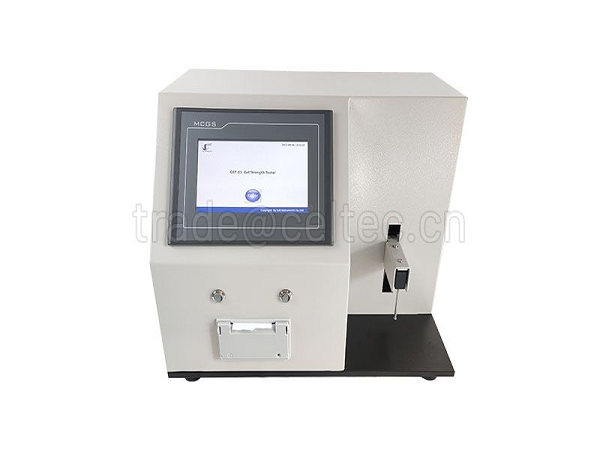
Why Is Gel Strength Testing Important?
Gelling agents, such as gelatin, play a key role in enhancing the texture, appearance, shelf life, and stability of processed foods. It is therefore essential for manufacturers to monitor how variations in ingredients and recipes affect gelling properties during production.
Regular testing of gel firmness ensures that products consistently meet both regulatory requirements and consumer expectations. By conducting proper gel strength testing, manufacturers can maintain high-quality standards and ensure that only safe, well-textured products reach the market.
Methods for Measuring Gel Strength
Gel strength can be evaluated using a variety of methods, including:
Manual methods – such as puncture or penetration tests
Physical tests – including cut or fragmentation tests
Mechanical tests – like compression tests
Rheological methods – using rotational measurements to assess flow and deformation
Optical techniques – such as computer-based imaging systems
Thermal methods – including differential scanning measurements
Ultrasonic techniques – like ultrasonic scanning
Electrical methods – such as electrochemical impedance measurements
Other indirect approaches – including general textural analysis systems
The choice of method depends on the type of sample being tested, but all approaches provide reliable results efficiently and with minimal effort.
Konklusion
Gel strength testing is essential for assessing the consistency and quality of food products throughout their shelf life. It ensures that only safe products with the desired texture and characteristics reach consumers, while also helping manufacturers reduce waste and optimize production efficiency.
A range of methods and instruments are available to measure gel properties, either directly or indirectly, depending on the specific application. Selecting the right approach before testing can save time and resources while guaranteeing accurate, consistent results across all batches.

 Dansk
Dansk  English
  العربية
  Български
  Čeština
  Deutsch
  Ελληνικά
  Español
  Eesti
Eesti  Suomi
Suomi  Français
  Magyar
  Bahasa Indonesia
  Italiano
  日本語
日本語  한국어
한국어  Lietuvių kalba
  Latviešu valoda
  Norsk bokmål
  Nederlands
  Polski
  Português
  Română
  Русский
  Slovenčina
  Slovenščina
  Svenska
  Türkçe
  Українська