
 المعايير
مقدمة في تحليل نسيج الطعام
Food texture plays a critical role in consumer satisfaction and product success. From the softness of sponge cakes to the crispness of croissants, texture defines a product’s appeal. Food texture analysis ensures manufacturers deliver consistent, high-quality bakery products, meeting the evolving expectations of diverse consumers, including those seeking gluten-free baked goods.
لماذا الملمس مهم في منتجات المخابز؟
In bakery production, texture impacts flavor perception, shelf life, and overall quality. Today’s market demands not just delicious, but also health-conscious options like gluten-free baked goods, which require precise control of textural properties. Food texture analysis provides valuable insights into firmness, extensibility, crispness, and more, enabling manufacturers to refine recipes for optimal consumer satisfaction.
Key Tools for Food Texture Analysis
إن محلل النسيج is the cornerstone of bakery product texture measurement. It evaluates a range of properties, including:
- الصلابة والنعومة
- المرونة والربيعية
- Crumb texture and crust effects
- Toughness and adhesiveness
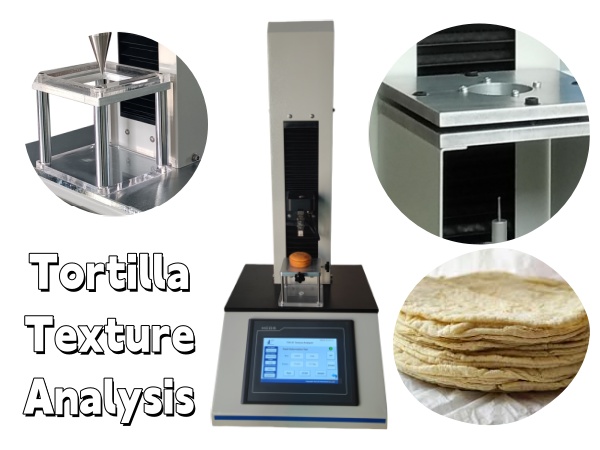
Common Test Methods and Standards
Manufacturers use a variety of test procedures to assess texture, such as compression, puncture, extrusion, and cutting. Standards like AACC and AIB ensure consistency and reliability in bakery product texture measurement. The محلل النسيج software automates these methods, making testing accessible and efficient.
Innovations in Gluten-Free Texture Analysis
The rise of gluten-free baked goods has driven advancements in food texture analysis. Gluten-free products often lack the structural integrity of traditional baked goods, necessitating unique testing methods. By employing tailored tools and methods, manufacturers can ensure these products meet consumer expectations for taste and texture.
Applications Beyond Bakery Products
While widely used in bakery settings, food texture analysis also applies to other food categories like confectionery, dairy, and snacks. The flexibility of the محلل النسيج allows manufacturers across industries to enhance product quality and performance.
الخاتمة
Food texture analysis is indispensable in today’s competitive bakery market. By leveraging cutting-edge tools and adhering to industry standards, manufacturers can achieve consistent quality and innovation. Whether optimizing recipes for traditional products or exploring new territory with gluten-free baked goods, texture analysis ensures success.
قسم الأسئلة الشائعة
- What is food texture analysis?
Food texture analysis evaluates the physical properties of food, such as firmness, elasticity, and adhesiveness, to ensure quality and consistency. - Why is texture important in bakery products?
Texture affects flavor perception, shelf life, and consumer satisfaction, making it critical for product success. - What tools are used for bakery product texture measurement?
A محلل النسيج equipped with specialized attachments like dough extensibility and stickiness rigs is commonly used. - How is texture analysis applied to gluten-free baked goods?
Gluten-free products require unique testing methods to ensure structural integrity and desirable texture. - What standards guide bakery product texture analysis?
Industry standards like AACC and AIB provide guidelines for consistent and reliable texture measurement.

 العربية
  English
  Български
  Čeština
  Dansk
Dansk  Deutsch
  Ελληνικά
  Español
  Eesti
Eesti  Suomi
Suomi  Français
  Magyar
  Bahasa Indonesia
  Italiano
  日本語
日本語  한국어
한국어  Lietuvių kalba
  Latviešu valoda
  Norsk bokmål
  Nederlands
  Polski
  Português
  Română
  Русский
  Slovenčina
  Slovenščina
  Svenska
  Türkçe
  Українська