
 Standartlar
Leak Test: Methods, Benefits, and Considerations
Leak testing is a critical process employed in various industries to ensure the integrity, safety, and quality of products and systems. In this comprehensive guide, we will dive deep into the world of leak testing, covering everything from the basics to advanced techniques. Let’s understand what a leak is, the different types of leaks, leak test methods, and much more.
What is a Leak?
A leak is an unintended escape of fluid or gas from a containment system. It can occur in various applications, from simple household plumbing to complex industrial processes. Leaks can lead to safety hazards, environmental issues, and product failures, highlighting the importance of a leakage test.
Three Types of Leak
Gross Leak: This type of leak is usually large and is often visible to the naked eye or easily detectable using basic methods. It results from noticeable defects like large holes, unsealed joints, or broken seals.
Fine Leak: These leaks are smaller and harder to detect. They can result from microscopic holes, fine cracks, or minute gaps in seals. Their detection often requires more sensitive methods or instruments, such as helium leak detection or pressure decay tests.
Permeation Leak: This isn’t a “leak” in the traditional sense, where a hole or gap exists. Instead, it’s when a gas or vapor permeates through the walls of a container or system due to the molecular nature of the material itself. Materials like certain plastics or elastomers might allow specific gasses to pass through them at the molecular level, even if there is no physical breach.
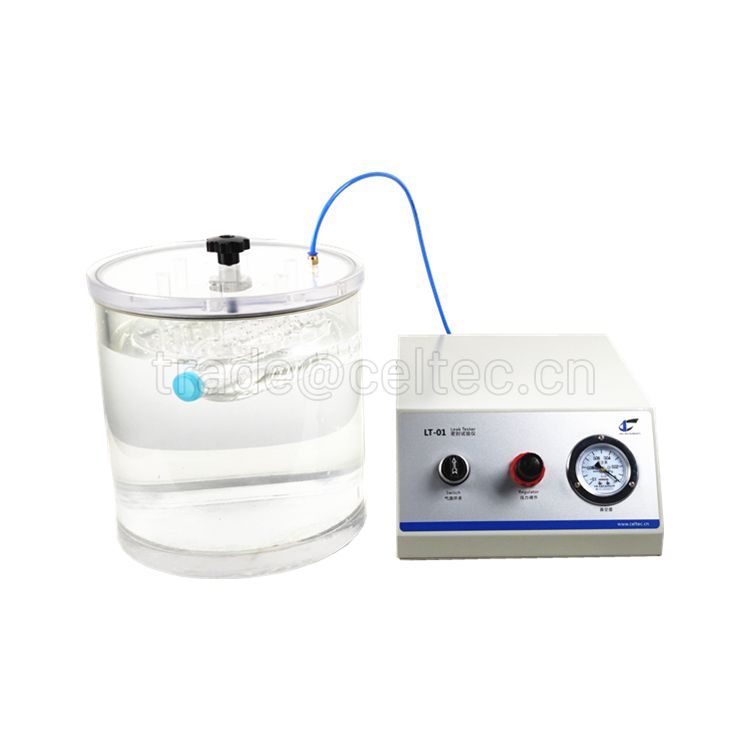
What is Leak Testing?
Leak testing is a quality control process used to identify and quantify leaks in a sealed system or component. Its primary goal is to ensure that a product or system meets specified performance and safety standards. Various methods are employed to conduct a leak test, depending on the application and the substance being tested.
Leak Test Methods
Pressure Decay Testing: This method monitors pressure changes within a sealed system over time to detect leaks accurately, making it suitable for various applications.
Mass Spectrometry: Mass spectrometry is a highly sensitive technique that identifies leaks by analyzing the mass-to-charge ratio of gas molecules, offering precise results.
Ultrasonic Testing: Ultrasonic sensors detect high-frequency sound waves generated by leaks, providing non-invasive and reliable leak detection.
Helium Leak Testing: Helium is used as a tracer gas in this method, allowing for the detection of minuscule leaks by utilizing its small molecular size and superior penetration capabilities.
Hydrostatic Testing: This method involves filling a sealed container with liquid and subjecting it to increased pressure to identify leaks by observing changes in the container’s shape or pressure.
Vacuum Testing: Vacuum testing assesses a sealed system’s ability to hold a vacuum, making it suitable for applications where pressure changes are not feasible.
Dye Penetrant Testing: Commonly used for inspecting welds, this method involves applying a colored dye to the surface, which seeps into any existing leaks, becoming visible under UV light.
Acoustic Emission Testing: By monitoring acoustic emissions from a sealed system, this method can detect structural defects or leaks by analyzing the emitted sound waves.
Infrared Thermography: Infrared cameras are used to identify temperature variations caused by leaks or pressure changes, making it an effective method for certain applications.
Pressure Decay Leak Testing
Pressure leak testing, widely recognized for its extensive utility, stands out as an exceptionally effective and efficient approach to uncovering leaks within sealed systems. The procedure starts with the meticulous sealing of the product or component under scrutiny, establishing an airtight enclosure. Following this, the system undergoes pressurization, reaching a predetermined level that ensures the desired pressure within the sealed environment. This moment marks the commencement of the observation period, wherein the system is vigilantly monitored for any potential pressure reduction.
In the presence of a leak, no matter how minute, the pressure within the sealed system experiences a decline. The precise rate of pressure decrease is systematically assessed over a specific timeframe, yielding quantifiable insights into the leak’s magnitude. The effectiveness, simplicity, and precision of pressure leak tester render it the preferred choice across diverse industries, guaranteeing the integrity and safety of their products.
Pressure Decay Test Benefits
Cost-Efficient: Pressure leak tester proves to be a cost-effective choice, particularly ideal for high-volume production, effectively minimizing overall expenses.
Swift Results: The testing speed adapts seamlessly to the internal volume of the component, ensuring rapid outcomes suitable for a wide range of applications.
Easy Setup: Pressure decay testing boasts a straightforward setup process, making it accessible across various industries without the need for complex installations.
Minimal Resource Requirements: This method relies exclusively on compressed clean, dry air, leading to significant reductions in operational costs.
Precision in Data: It provides highly accurate quantitative information concerning leak rates, facilitating meticulous quality control measures and enhancing product quality.
Non-Invasive: Pressure decay testing safeguards the integrity of the product being tested as it doesn’t pose any harm to the item during the testing process.
Efficient Production: Requiring minimal pre or post-processing, it results in streamlined production processes, optimizing resource and time utilization for enhanced efficiency.
Pressure Decay Leak Test Applications
Automotive, Aerospace, and Energy Sector
Pressure leak testing is paramount in the automotive industry for validating the integrity of components like fuel tanks, radiators, and air conditioning systems, ensuring vehicle safety. In aerospace, it maintains the reliability of aircraft components, including fuel tanks, contributing to flight safety. Moreover, the energy sector relies on this method to test pipelines, valves, and equipment, preventing leaks and upholding environmental safety standards.
Elektronik ve Tüketim Malları
The electronics industry frequently employs pressure decay testing to seal sensitive devices like smartphones, circuit boards, and sensors, protecting them from moisture and contaminants. Simultaneously, in the consumer goods sector, it verifies the quality and safety of everyday products, ranging from aerosol cans to batteries and electronic gadgets, enhancing consumer trust.
Tıbbi Cihazlar ve İlaçlar
Pressure decay testing is indispensable in the medical field, ensuring the safety and functionality of critical equipment such as infusion pumps, respirators, catheters, and drug vials. This method contributes to patient well-being and the quality and sterility of pharmaceutical products, which are vital for healthcare.
HVAC (Heating, Ventilation, and Air Conditioning) and Packaging
HVAC systems benefit from pressure decay testing to check their tightness, optimizing energy efficiency and minimizing refrigerant leakage. Additionally, the packaging industry relies on this method to guarantee the seal integrity of various products, including food containers, pharmaceutical packaging, and beverage bottles, preserving product quality.
Chemical Manufacturing and Environmental Safety
In the chemical industry, pressure decay testing plays a critical role in preventing leaks in chemical containers and equipment, ensuring workplace safety. Moreover, it contributes to environmental safety by helping to maintain the integrity of industrial equipment, reducing the risk of hazardous leaks.
Frequently Asked Questions
What is the most common leak?
The most common type of leak is gas leaks, often involving substances like natural gas or air escaping from a sealed system.
What is a positive leak test?
A positive leak test is a method that intentionally introduces a test gas or liquid into a sealed system to determine if there are any unintended leaks by observing the presence of the test substance.
What is a negative leak test?
A negative leak test involves creating a vacuum or pressure differential around a sealed system and monitoring whether any air or gas is drawn into the system, indicating a potential leak.
What is an air leak test?
An air leak test, also known as an air leak detection test, is a method used to identify and quantify leaks in a sealed system or component by introducing compressed air and monitoring for pressure changes.
What role does technology play in modern leak testing?
Technology plays a pivotal role in enabling advanced leak testing methods, automation, and data analysis, improving overall efficiency and accuracy.
What are the consequences of not conducting proper leak testing?
Neglecting leak testing can lead to product failures, safety hazards, environmental pollution, and costly recalls.
How often should leak testing be performed?
The frequency of leak testing depends on factors like industry regulations, product specifications, and the criticality of leak detection. Regular testing is essential to maintain product integrity.


 Türkçe
  English
  العربية
  Български
  Čeština
  Dansk
Dansk  Deutsch
  Ελληνικά
  Español
  Eesti
Eesti  Suomi
Suomi  Français
  Magyar
  Bahasa Indonesia
  Italiano
  日本語
日本語  한국어
한국어  Lietuvių kalba
  Latviešu valoda
  Norsk bokmål
  Nederlands
  Polski
  Português
  Română
  Русский
  Slovenčina
  Slovenščina
  Svenska
  Українська