
Leak Testing: A Guide
Leak testing is a procedure that inspectors use to determine whether an object or system is functioning within a specific leak limit.
Leaks occur when there is a defect—a hole, crack, or some other kind of flaw—in an object, allowing whatever the liquid or gas it is holding to flow out. Leak testing uses pressure to find these defects so that they can be addressed as part of regular maintenance procedures.
In general, leak tests are performed on objects that are used to store or move liquids or gases.
Leak testing is one of the most commonly used inspection methods. It falls into the category of non-destructive testing (NDT) methods because inspectors can perform it without permanently altering or damaging the object they’re inspecting.
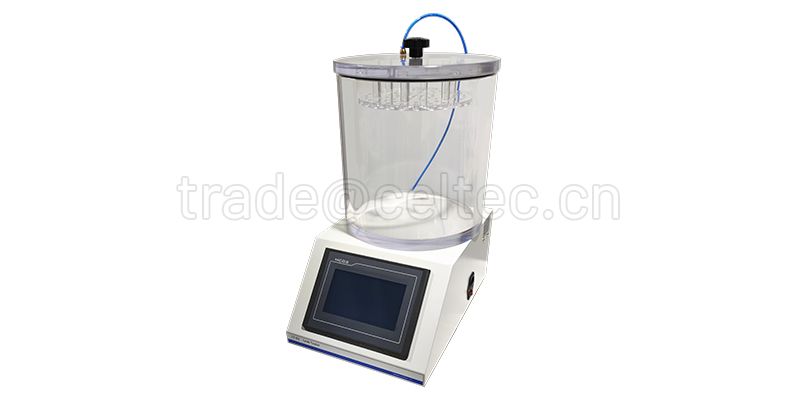
What Is Leak Testing?
In leak testing, inspectors use pressure to identify the presence of defects in an object that are causing leaks.
When substances leak out of a container they flow from where the pressure is higher pressure to where it is lower. Leak testing leverages this phenomenon, using pressure to generate flow toward lower pressure—that is, the location of leaks—while carefully monitoring that flow.
When should leak testing be performed? Primarily when testing for flaws within a closed system.
The success of a leak test depends on the object that is being tested. Different types of materials and objects may respond differently to the high pressures typically used in leak testing to force a liquid or gas out of a defect, thus revealing its presence and location.
In leak testing materials, inspectors will be looking for defects like:
Cracks
Holes
Weak seals
Other flaws or imperfections that may be allowing a gas or liquid to leak out of an object or system
Here are the industries that commonly use leak testing as part of their maintenance processes:
Automotive
Consumer goods
Medical Devices
Packaging
Sealed Electronics
Advances in Leak Testing
Over the last several years, advancements in sensors, chips, valves, and other types of technology have helped make leak testing more sensitive and capable as an NDT method.
All of these advances have made leak testing faster and more accurate, and have in turn helped companies to improve the quality of their manufacturing processes and their overall output.
One of the biggest advances in leak testing has been the advent of the Internet of Things. Now, with an internet connection, inspectors can collect, monitor, and share leak testing data remotely, allowing them to get the information they need in a timely manner to ensure ideal maintenance.
This data can be evaluated not just by inspectors but also by manufacturing engineers, production managers, maintenance managers, and other stakeholders in the manufacturing process, allowing for improved, real-time insights into the conditions of the assets they’re using.
Leak Testing Methods
Here are some of the most common leak test methods:
Burst. This leak test method uses either a destructive or a non-destructive test that ramps pressure in order to find the point at which the device will break open (i.e., burst).
Chamber. This leak test method is used to identify defects that are causing leaks in a sealed environment, like a device or package, that was not built with an opening to allow for the introduction of pressure for leak testing.
Pressure crack. This leak test method is used to identify “weeping” in valves with a downstream sensor monitor.
Pressure / vacuum. This leak test method uses the pressurization of a test object and a reference volume. If a leak is present, the difference between the two will decrease. (This process is fully automatic.)
Pressure decay. This leak test method uses the pressure change of an object or system under positive pressure to identify defects that are causing leaks.
Vacuum decay. This leak test method uses the pressure change of an object or system under negative pressure to identify defects that are causing leaks.
Occlusion. This leak test method identified obstructions in the flow path of a gas to identify defects that are causing leaks.
The leak test pressure limit for leak tests typically uses low pressure. Most codes for leak test pressure limits call for the pressure to be at least 15 psi or 25% of the design pressure (whichever pressure is less).
Leak Testing Considerations
Because a leakage inspection requires inspectors to insert pressure into an object in order to identify leaks it has some unique considerations as an NDT method.
Here is an overview of things to keep in mind.
Acceptable leak rate
It’s important for inspectors and maintenance personnel to know the acceptable leak rate for an object or system when performing leak testing.
Not all leaks require maintenance—some may just require further monitoring, or even no action at all. Different industries will typically have guidelines detailing acceptable leak rates for different products and substances.
Manufacturing considerations
Before performing a leak test it’s important to consider the function for which a system, part, or object was originally made.
The target use case for a given object may require manufacturers to have created it in such a way that it will either retain or allow liquids to pass through it.
For example, a car part may be designed specifically so that gases can’t escape from it, or an IV may be designed to keep liquids inside it.
Material considerations
The substance that the object is made out of—its material—will impact a leak test, and should also be considered.
If a material is overly brittle or overly malleable, these qualities will directly relate to how the introduction of pressure will change the object, causing it to expand or change shape in some other way that should be considered when planning a leak test.
Medium considerations
The substance an object is made to hold must be considered when planning a leak test.
Different substances have different molecule sizes. When performing a leak test, it’s important to know the size of defect that might be acceptable, and the size that would be big enough to allow a specific liquid or gas to escape.
A related consideration is pressure, because different substances will respond differently to different ranges of pressure. A pressure range that is too high could potentially damage the object being tested, while a pressure range that is too low may return inconclusive results.
Leak Testing Equipment
Here are some examples of the types of equipment that is commonly used for various leak testing methods.
Air LeakAGE INSPECTION Devices
Air leak testing devices have displays that show inspectors data from ongoing leak tests. These devices can be used for a variety of types of leak testing, including vacuum decay, pressure decay, burst, chamber, and others.
Compact Pressure Decay Leak Tester
This kind of compact leak tester can be placed close to fixtures being used in leak testing, allowing inspectors to reduce the amount of connection volume needed for the test. This reduction in volume allows for a decrease in the time needed for the leak test and an increase in test sensitivity.
Large Display Leak Tester
Larger display leak testers have larger screens, greater internal capacity, larger test volumes, and allow for faster testing.
Leak Standard
Inspectors use leak standards to define the parameters of their leak test by creating a simulated leak in the part under test, or to compare multiple leak systems with each other.
Leak Testing Standards and Codes
Leak testing is commonly used for code-based inspections, and there will be a leak testing standard (or standards) in most countries that use these kind of tests for inspections.
Here are some of the more widely used leak testing codes:
ASME (AMERICAN SOCIETY OF MECHANICAL ENGINEERS)
ASTM (American Society for Testing and Materials)
ISO (International Organization for Standardization)
Leak Test Equipment
Thus disposing both to the expertise in selecting suitable components according to the application and to all the software libraries that can optimize the quality of the measurement.
Without any doubt, and by way of example only, T8730 with electronic adjustment is definitely the best performing and most reliable product in the leak testing industry today.
How to Choose the Right Leak Testing Equipment
Leak testing processes ensure the high-quality, consistent performance of products that need to provide a reliable seal at a set pressure level. However, there are many different types of leak tests, such as helium leak tests, mass extraction tests, and more.
Types of Leak Testing Technology
There are eight major types of leak testing that your facility can use to ensure the integrity of products. They are:
Air Leak Testing With a Micro-Flow Sensor at Pressure Conditions
This leak test measures and replenishes lost air from products under test conditions. The test uses an integrated microsensor that can replace emitted or leaked air within a part or assembly so the test product stays under consistent pressure conditions. This helps measure the rate of air leakage.
Air Leak Testing With Mass Extraction (Vacuum Conditions)
Rather than holding the test product under standard environmental conditions, this test holds the product under vacuum conditions to identify and measure any leaks. The vacuum conditions make the test more sensitive and informative. It also uses a Micro-Flow sensor.
Helium Leak Detection
This test relies on a tracer gas that a field mass spectrometer can easily measure. A popular tracer gas is helium, as spectrometer units set to 4 amu can detect ionized helium to measure the severity of any leaks.
Ultrasonic Testing
Rather than measuring trace gases or direct air leaks, ultrasonic testing processes involve identifying any sound waves that indicate the presence of a leak. Leak sources generate ultrasonic signals that technology can use to uncover the location of the leak.
Thermal Imaging
Leaks cause temperature fluctuations when the body of the product, the internal fluid, and the surrounding environment have different temperatures. As a result, manufacturers can use thermal imaging via infrared cameras to detect the presence and location of any potential leaks in a test product.
Tracer Gas Detection
Tracer gas detection is a broader category of testing that includes helium leak detection. In these processes, helium, hydrogen, or another tracer gas, is used to find potential leaks. The gas moves throughout the test product and concentrates near the leak. Testers can then use technology to sense those concentrations and uncover leaks. This type of testing process is often used in plumbing, refrigeration, and HVAC systems.
Dye Penetrant Testing
For welds or joints that may have a leak, testers can apply a dye-penetrant substance to the area. Any leaks will draw the dye into the gap or defect, allowing testers to inspect the area and see the displaced dye under specific lights.
Acoustic Emission Testing
Similar to ultrasonic testing, acoustic emission testing uses sound waves to uncover the presence of potential leaks. Leaks can output acoustic signals and stress waves, which technology can then pinpoint.
Understanding Your Application
Leak testing is a vital process in many different industries. As a result, each industry or specific product may be subject to different testing requirements. These industrial regulations may guide the type of testing required, the quality control standards which must be met, and the maximum allowable leakage. Some industry-specific considerations include:
Aerospace and Automotive: Some parts that often undergo leak testing include air conditioning systems, brakes, power train systems, heat exchangers, welded systems, and machined castings.
Medical: Medical devices and implants, single-use disposal technologies like catheters, and laboratory equipment often undergo leak testing.
Pharmaceuticals: Packages like vials must also be tested for leaks, as any potential leak is just as likely to allow microbial contaminants in as it is to allow pharmaceutical goods to leak out. Packages undergo helium leak detection tests to measure them against maximum allowable leak levels (MALLs).
Consumer Electronics and Utilities: These products or systems are tested to ensure minimal risk of water contamination.
Factors to Consider
Because different products and applications require different types of tests, it’s important to select the right leak detection process for your company’s unique production or service needs. Consider the following:
Leak test conditions: Different products must have or cannot have different pressurized leak conditions, either outside or inside the product.
Environmental factors: The test environment will affect the viability of different tests.
Cost: More complex tests are often more expensive than simple tests that can be done under diverse environmental conditions. Consider both the cost of the materials and/or service and the cost of preparing for the test.
Throughput and cycle times: The speed of each test matters, especially if every part must be individually tested.
If you would like more information about this product, please feel free to contact us.

 Português
  English
  العربية
  Български
  Čeština
  Dansk
Dansk  Deutsch
  Ελληνικά
  Español
  Eesti
Eesti  Suomi
Suomi  Français
  Magyar
  Bahasa Indonesia
  Italiano
  日本語
日本語  한국어
한국어  Lietuvių kalba
  Latviešu valoda
  Norsk bokmål
  Nederlands
  Polski
  Română
  Русский
  Slovenčina
  Slovenščina
  Svenska
  Türkçe
  Українська