
 Standarder
Surgical suturing is an essential component of modern medicine, and at its core lies the humble yet sophisticated surgical needle. Ensuring that these needles perform consistently and safely is critical for reducing tissue trauma and enhancing surgical precision. The ASTM F3014 standard, known formally as the Standard Test Method for Penetration Testing of Needles Used in Surgical Sutures, provides a detailed protocol for quantifying the penetration force required by a surgical needle as it passes through a chosen medium. This article explores the significance, methodology, and future outlook of this test method, which has guided manufacturers and clinicians alike in evaluating needle performance.
Background and Significance
Surgical needles are typically coated to reduce friction as they traverse tissue, ensuring smoother insertion and reducing the force needed to penetrate. The coating must strike a delicate balance between lubricity—facilitating easier passage—and durability, which maintains its effectiveness over multiple uses. In clinical practice, a needle with a low and consistent penetration force offers a surgeon enhanced control during procedures, particularly in delicate or constrained anatomical regions. For example, when operating near vital structures or in areas with limited access, even slight variations in penetration force can impact surgical outcomes. ASTM F3014 was developed by experts from ASTM International’s Committee F04 on Medical and Surgical Materials and Devices to standardize the way these forces are measured, ensuring that needles meet rigorous performance criteria before reaching the operating room.
Methodology and Test Procedure
The ASTM F3014 test method is designed for both straight and curved needles, accounting for the distinct mechanical behaviors associated with each design. The test is structured in phases, with the initial phase focusing on the test procedure itself rather than specifying the test medium—a subject reserved for future development in Phase 2. During testing, the needle is first securely clamped in a fixture at a designated gripping location. This uniform placement, typically in front of the needle’s attachment zone, ensures that the measured forces are attributable solely to the needle’s properties rather than variations in clamping or positioning.
Once the needle is fixed, it is advanced through a chosen medium at a controlled speed. For straight needles, the test requires a uniform, perpendicular penetration, whereas curved needles are tested in such a manner that the needle’s major axis is consistently followed throughout the penetration cycle. Data is collected continuously via a load cell that records the force required to breach the medium. Importantly, the test is repeated multiple times—often a minimum of ten penetrations per needle—to assess not only the initial performance but also the needle’s ability to maintain its characteristics over repeated use.
Instrumentation and Key Parameters
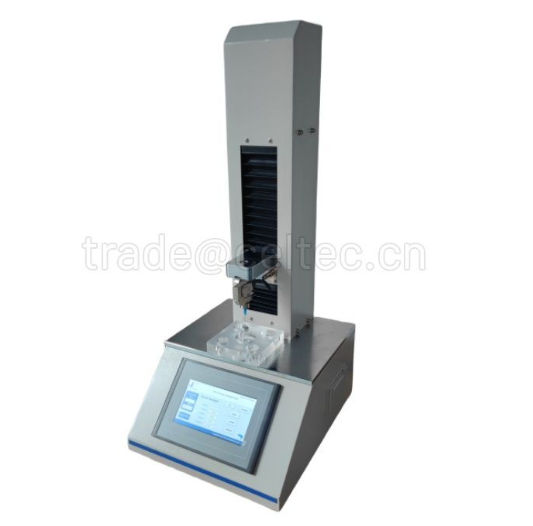
Critical to the success of the test are the apparatus and settings used. The fixture, which holds the needle, must offer a secure and consistent grip to eliminate any movement that could skew results. Load cells with high sensitivity are employed to record the force applied, and the test apparatus must allow for precise control over penetration speed. For curved needles, two main testing modalities are described: a rotational method, where the fixture rotates at a constant angular speed (for example, 4°/s), and a linear method, where the needle is advanced at a steady linear speed. The choice between these methods is dictated by the needle’s design, as the resulting data from each cannot be directly compared but can be used for within-group quality control.
The test method quantifies two crucial aspects: the peak penetration force—the maximum force required during the test—and the change in force over multiple penetrations. This comparative data is essential in evaluating the performance of the needle coating. An ideal coating would offer low initial penetration force while maintaining its lubricity across repeated uses, thereby preventing any significant increase in force that might compromise tissue integrity.
Industrial and Clinical Impact
Den standard test method plays a vital role in both product development and quality assurance. For manufacturers, it serves as a benchmark for designing needles that not only meet clinical performance requirements but also adhere to stringent safety standards. By providing a repeatable and reliable measurement technique, ASTM F3014 facilitates rigorous comparisons between different needle designs and coating materials. Clinicians benefit indirectly through the assurance that the needles they use have been subjected to standardized, quantifiable testing, leading to improved surgical outcomes.
Moreover, insights gained from penetration testing can drive innovation in needle design. For instance, manufacturers may explore advanced coating technologies that enhance lubricity without sacrificing durability, thereby minimizing the penetration force further and improving patient comfort. The standard’s continuous evolution, even though ASTM F3014-14 has been withdrawn as of 2023, underscores the dynamic nature of medical device testing. It serves as a reminder that standards must evolve to keep pace with emerging technologies and clinical needs.
Future Outlook
As surgical techniques and materials advance, so too must the methods for evaluating these tools. Future revisions of ASTM F3014 are expected to address the test medium explicitly, incorporating materials that better simulate the mechanical properties of living tissue. This enhancement will enable a more accurate prediction of how needles perform in vivo, leading to even safer surgical products. Additionally, ongoing collaboration between clinicians, engineers, and regulatory bodies will likely refine testing parameters further, ensuring that the standard remains relevant and robust.
Konklusjon
In summary, the Standard Test Method for Penetration Testing of Needles Used in Surgical Sutures offers a critical framework for ensuring that surgical needles perform reliably and safely. By quantifying the penetration force required through a controlled test method, the standard provides invaluable insights into needle performance, directly impacting clinical practice and patient outcomes. While ASTM F3014 has undergone changes—including its recent withdrawal and anticipated future revisions—the core objective remains clear: to foster innovation and ensure that surgical needles meet the highest standards of quality and efficacy. Through continued development and rigorous testing, the medical community can look forward to surgical instruments that enhance precision and safeguard patient health.

 Norsk bokmål
  English
  العربية
  Български
  Čeština
  Dansk
Dansk  Deutsch
  Ελληνικά
  Español
  Eesti
Eesti  Suomi
Suomi  Français
  Magyar
  Bahasa Indonesia
  Italiano
  日本語
日本語  한국어
한국어  Lietuvių kalba
  Latviešu valoda
  Nederlands
  Polski
  Português
  Română
  Русский
  Slovenčina
  Slovenščina
  Svenska
  Türkçe
  Українська