
Plastic Film Tester | for Paints and Coatings
For coatings to perform satisfactorily, they must adhere to the substrate on which they are applied. A variety of recognized methods can be used to determine how well a coating is bonded to the substrate. Common measuring techniques include mechanical adhesion testing, plastics testing, or using a knife.
Understanding Adhesion in Coatings
Adhesion is the ability of a coating—such as paints and varnishes—to bond to a substrate (known as substrate adhesion) or to adhere to multiple coats in a system (termed inter-coat adhesion). For coatings to perform satisfactorily, they must bond effectively to various substrates including metal, concrete, wood, and more.
Adhesion Test Methods
Pull-off Adhesion Test
A Tensile Pull-Off Adhesion Test quantitatively measures the force required to detach a loading fixture (dolly or stub) from the coating. A portable pull-off adhesion tester applies an increasing load until the dolly is pulled off. The measured force—expressed in mega Pascals (MPa) or pounds per square inch (psi)—indicates the tensile strength of the coating bond. Standards such as ASTM D4541/D7234 and ISO 4624 guide this method.
Push-off Adhesion Test
Similar to the pull-off test, the Push-off Adhesion Test measures the force required to push a dolly (stub) off the surface. A center hole in each dolly allows a pin to be inserted, and manual or hydraulic pressure is applied until the dolly is detached.
Knife Adhesion Test
This subjective test involves cutting an “X” (with a 30° to 45° angle between the legs) into the coating using a utility knife and a metal straightedge. The knife is then used to attempt to lift the coating from the substrate or an underlying layer. ASTM D6677 details this test method.
Tape Adhesion Tests
ASTM D3359 outlines two methods for testing adhesion using pressure-sensitive tape applied over cuts in the film:
Method A (X-cut): For coating systems over 5 mils (125 µm), an X-cut is made through the coating, tape is applied at the intersection, and then removed rapidly to inspect for coating removal.
Method B (Cross-cut): For coatings less than 5 mils (125 µm), a lattice or cross-hatch pattern is cut, and tape is applied and removed. The area is then rated against the ASTM D3359 standard.
Scrape Adhesion Test
The Scrape Adhesion Test utilizes a weighted balance beam with a rounded stylus. The coated panel is pushed beneath the stylus, and increasing weight is applied until the film is scraped loose. The adhesion is reported as the weight (in kilograms) required to remove the film. Depending on the coating and substrate, ASTM standards such as D2197, D2248, D2454, and D5178 may apply.
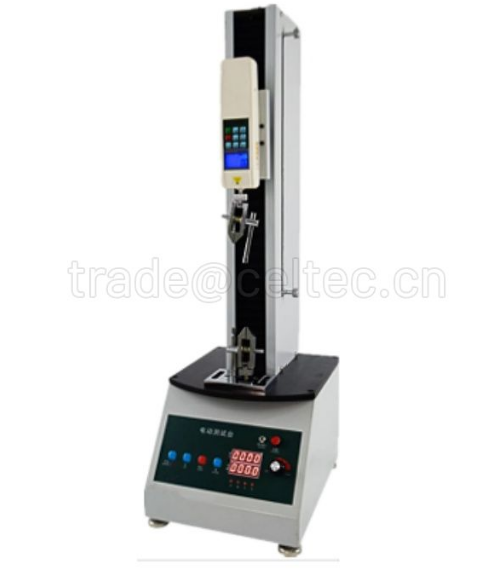
Additional Adhesion Test Methods
Knife Test
In the Knife Test, a utility knife is used to make an X-cut through the coating down to the substrate. The inspector then attempts to lift the coating from the substrate at the vertex of the cut. This method is highly subjective and its value depends on the inspector’s experience. ASTM D6677 provides the standard for this test.
Tape Test
A more formal version of the Knife Test on metal substrates is the Tape Test. It involves:
X-cut Tape Test: An X-cut is made, tape is applied over the cuts, and then removed rapidly. The coating removal is inspected and rated.
Cross-hatch Tape Test: A cross-hatch pattern is cut (using a special cross-hatch cutter), tape is applied, and then removed. The test area is compared to ASTM D3359 standards.
Pull-Off Adhesion Test (Revisited)
This test, as previously described, involves affixing a dolly to the coating with adhesive. The pull-off force is gradually increased until the dolly detaches. The test is sensitive to device specifications and substrate stiffness, and various dolly sizes (e.g., 20 mm, 50 mm) may be used to suit different bond strengths.
Scrape Test (Revisited)
In a controlled laboratory setting, the Scrape Test uses a balanced-beam scrape-adhesion tester to determine the force required to remove the coating from a smooth, flat surface, following ASTM D2197 guidelines.
Paint Adhesion Tests
Paint adhesion tests evaluate how well a paint or coating adheres to a surface. Common tests include:
Cross-cut Test: A grid pattern is cut into the coating, pressure-sensitive tape is applied and then removed. The adhesion is rated, typically on a 0–5 scale, as per ASTM D3359.
Pull-off Test: A dolly is affixed to the surface and a tensile force is applied until the coating is detached. This method is suitable for on-site testing.
Scrape Adhesion Test: Measures the force required to scrape the coating from the surface.
Burnishing Test: Another method used to evaluate paint adhesion.
Other Adhesion Test Methods and Standards
Additional methods involve tensile test machines where paint is applied to a substrate with a textile strip embedded, or between two substrate sheets. ASTM D2370 covers tests for elongation, tensile strength, and stiffness of organic films. Adhesion of coatings on plastic substrates using aluminum studs is addressed in ASTM D5179.
ASTM D5179 Fixture
The ASTM D5179 fixture is used for instrumented indentation testing (nano- or micro-indentation) to measure the hardness of plastics and elastomers. Its key features include:
Indentation mechanism with a hard probe
Stable base for secure specimen support
Precise load application system
Depth measurement system for assessing indentation depth
This fixture is widely used in quality control and R&D in industries such as automotive, aerospace, and consumer goods.
Additional Standards
Other relevant ASTM standards include:
ASTM D4145: Bending test for determining flexibility and adhesion of coatings on prepainted metallic substrates.
ASTM 4146: Formability and adhesion testing for factory-applied zinc-rich primer/chromate complex coatings on steel.
Hardness tests (pencil hardness, gravelometer, impact tests, mandrel bend) that also note coating chip-off or loss of adhesion.
ASTM Paint Adhesion Testing Methods and Standards
There are three primary paint adhesion tests used to assess the resistance of paints:
Cross-Cut Test: Cuts are made through the coating, tape is applied and removed, and the adhesion is rated based on ASTM D3359.
Scrape Test: Conducted in the laboratory, this test measures the force required to scrape the coating from the substrate (ASTM D2197).
Pull-Off Test: Measures the tensile stress required to remove the coating using a dolly, in accordance with ASTM D4541 and ISO 4624.
These tests quantify the strength of the bond between the coating and substrate or between multiple layers, ensuring that coatings meet quality standards and perform reliably.
Išvada
From the largest man-made structures to the smallest household appliances, protective and cosmetic coatings are essential. Adhesion testing provides a quantitative assessment of the bond strength between coatings and substrates, helping to detect potential failures and ensure long-term durability. Consistent use of standardized test methods is crucial for maintaining quality and reducing rework costs.
We always believe that a person’s character determines the high quality of the product, and details determine the excellence of the product. With the spirit of truth-seeking, efficient and innovative employees for Leak and Seal Strength Tester,Paper Board Tester,Adhesiveness Tester,Plastics Testing,Leak Test Equipment,Medical Device Testing,Container Testing,Electronics Testing
Jei norite gauti daugiau informacijos apie šį gaminį, nedvejodami susisiekite su mumis. Rekomenduojame jums kitus populiarius produktus: Adhesiveness Testing, Laboratory Hot Tack Tester, plastic film testing, gelbo flex tester manufacturer, Hot Tack Tester factory, Gelbo Flex Tester manufacturer, Gelbo Flex Tester supplier, Gelbo Flex Tester services, Leak and Seal Strength Tester solution, Plastikinių plėvelių testerių gamykla, Plastic Film Testing factory, Gelbo Flex Tester solution, Paper Board Tester manufacturer, Lankstus patvarumo testeris, Lankstaus patvarumo testerio gamintojas, Lankstaus patvarumo testerio tiekėjas, Lankstaus patvarumo testerio paslaugos, Flex Durability Tester solution
 Lietuvių kalba
  English
  العربية
  Български
  Čeština
  Dansk
Dansk  Deutsch
  Ελληνικά
  Español
  Eesti
Eesti  Suomi
Suomi  Français
  Magyar
  Bahasa Indonesia
  Italiano
  日本語
日本語  한국어
한국어  Latviešu valoda
  Norsk bokmål
  Nederlands
  Polski
  Português
  Română
  Русский
  Slovenčina
  Slovenščina
  Svenska
  Türkçe
  Українська