
What is the Box Compression Tester ?
Box compression testers are essential tools for ensuring the quality and durability of packaging materials. By measuring the amount of force that a box can withstand before it collapses, these testers provide accurate and reliable data that manufacturers can use to improve their products and meet industry standards.
The Basics of Box Compression Testing
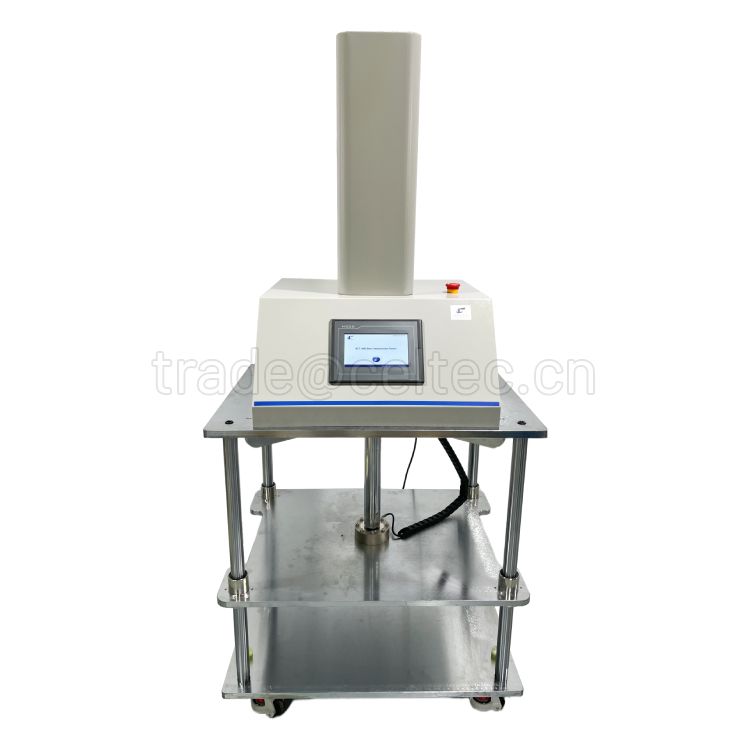
To perform a box compression testing, a sample box is placed on a flat surface and a compressive force is applied from the top. The force is gradually increased until the box collapses or reaches a predetermined limit. The amount of force required to crush the box is measured in pounds or kilograms, and this value is used to calculate the box’s compression strength.
Why Accurate Results are Important
A company that produces fragile electronic components. These components need to be packaged carefully to avoid damage during shipping. The company uses boxes made from a certain type of cardboard that they believe is strong enough to protect the components.
However, the company does not perform regular compression test for corrugated boxes to ensure the strength of the boxes. As a result, some of the components are damaged during shipping, leading to customer complaints, returns, and lost revenue.
Upon investigating the issue, the company discovers that the cardboard boxes they are using have a lower compression strength than they initially thought. If they had performed regular box compression tests, they would have known this and could have chosen a stronger material for their boxes.
In this example, accurate box compression test results could have helped the company avoid costly issues such as customer complaints and returns, as well as identify the need for a stronger packaging material to better protect their products during shipping.
Accurate box compression test results are critical for several reasons. First and foremost, they provide valuable information about the quality and strength of the packaging material being used. Inaccurate test results can lead to products that fail to meet industry standards or that are prone to damage during shipping. This can result in customer complaints, returns, and even legal issues if products are damaged during transit.
By analyzing the test results, manufacturers can identify weaknesses in their packaging materials and make adjustments to improve their strength and durability. This can lead to cost savings in the long run, as well as improved customer satisfaction and loyalty.
Factors That Affect Test Results
Several factors can affect the accuracy of box compression test results. These include the type of box being tested, the testing method used, and the condition of the testing equipment. To ensure accurate results, it’s essential to follow industry-standard testing procedures and use well-maintained and calibrated equipment.
1. Compression speed:
The speed at which the box is compressed can impact the test results. If the compression speed is too fast, it can cause inaccurate readings due to the box’s viscoelastic behavior.
2. Temperature and humidity:
The temperature and humidity of the testing environment can affect the material’s properties and, consequently, the test results. Higher temperatures and humidity levels can cause the material to become softer, leading to lower compression strength.
3. Box size and design:
The size and design of the box being tested can impact the results. A larger box may require a higher compression force to reach its breaking point, while a smaller box may break at a lower force. Similarly, a box’s design, such as the presence of flaps or reinforcements, can affect its compression strength.
4. Edge effects:
The edges of the box being tested can be more prone to failure due to manufacturing defects or stress concentration. Edge effects can lead to inconsistent results, making it essential to ensure that the box’s edges are in good condition and uniform.
5. Equipment calibration:
The accuracy of the test results depends on the equipment used to conduct the test. It’s crucial to ensure that the equipment is calibrated correctly, and any potential errors or malfunctions are addressed before conducting the test.
6. Sample size:
The sample size of the boxes being tested can affect the results. Testing a larger sample size can provide a more representative picture of the material’s compression strength.
Who needs to use a Box Compression Tester?
This tester is indispensable for manufacturers of packaging materials, quality control personnel, and shipping companies. It is also crucial for industries where the physical protection of products during shipping and handling is a priority, such as electronics, appliances, and consumer goods manufacturers.
Why is Box Compression Testing Important?
Testing the compression strength of boxes is crucial for several reasons:
- Quality Assurance: Ensures that the packaging can withstand the physical demands of shipping, handling, and stacking during storage.
- Cost Efficiency: Helps in selecting the right packaging material that is cost-effective without compromising on quality, avoiding over-engineered and more expensive solutions.
- Customer Satisfaction: Reduces the risk of product damage during transport, leading to fewer returns and higher customer satisfaction.
- Regulatory Compliance: Meets various national and international standards for packaging, which might be required in certain industries.
Key Features of a Good Box Compression Tester
When selecting a Box Compression Tester, consider the following features to ensure it meets your needs:
- Accuracy: High precision sensors that provide reliable and repeatable results.
- Durability: Robust construction suitable for industrial environments.
- Usability: Easy-to-use interface with digital controls and displays.
- Customizability: Options to customize load capacities, dimensions, and software for specific testing requirements.
- Integration: Capabilities to integrate with other quality management systems for comprehensive monitoring and analysis.
Applications of Box Compression Testers
- Packaging Development: Used in the design phase to test and refine packaging materials.
- Production Control: Regular testing during production ensures consistent quality.
- Research and Testing: Helps in developing new packaging materials and improving existing designs.
Box Compression Tester are invaluable for businesses that rely on the safety and integrity of their packaging to protect products during transport and storage, ensuring that all packaging meets the necessary standards and specifications.
FAQs About Box Compression Testers
Q1: Who should use a Box Compression Tester?
A1: Manufacturers of packaging materials, quality control laboratories, and companies involved in shipping and logistics can benefit from using a BCT. It’s particularly useful for industries where product protection is critical, such as electronics, pharmaceuticals, and food and beverage.
Q2: What are the key benefits of using a Box Compression Tester?
A2: The main benefits include ensuring the packaging can withstand physical stress, optimizing packaging materials to save costs, complying with industry standards, reducing product damage during shipping, and improving customer satisfaction through reliable product delivery.
Q3: Can the Box Compression Tester be customized for different sizes and types of packaging?
A3: Yes, many BCT models are adaptable and can be customized to handle various packaging sizes and materials, ensuring versatility across different products and packaging designs.
Q4: What features should I look for when choosing a Box Compression Tester?
A4: Consider features such as the maximum force capacity, the size of the compression plate, ease of use, digital controls for precise operation, data recording capabilities, and the ability to integrate with other testing systems.
Q5: How can a Box Compression Tester help in improving packaging design?
A5: By testing different materials and structural designs under controlled conditions, companies can identify the most efficient and cost-effective packaging solutions. Continuous testing enables innovation and improvement in packaging design, ensuring optimal protection and performance.
Q6: Is training required to operate a Box Compression Tester?
A6: Basic training is typically necessary to ensure operators can use the machine effectively and safely. Many manufacturers offer training sessions at the time of purchase, and some also provide manuals and online tutorials.
Q7: Where can I purchase a Box Compression Tester?
A7: BCTs can be purchased from manufacturers specializing in testing equipment for the packaging industry. It’s advisable to choose a supplier with good after-sales support and the ability to provide calibration and maintenance services.
Conclusion
A Box Compression Tester is an invaluable tool for anyone involved in the manufacturing, testing, or shipping of packaged goods. It ensures that packaging is capable of withstanding the rigors of transit and storage, helping to maintain product integrity and customer satisfaction. By understanding the capabilities and features of a Box Compression Tester, businesses can better ensure that their packaging strategies meet both consumer expectations and regulatory standards.

 English
  العربية
  Български
  Čeština
  Dansk
Dansk  Deutsch
  Ελληνικά
  Español
  Eesti
Eesti  Suomi
Suomi  Français
  Magyar
  Bahasa Indonesia
  Italiano
  日本語
日本語  한국어
한국어  Lietuvių kalba
  Latviešu valoda
  Norsk bokmål
  Nederlands
  Polski
  Português
  Română
  Русский
  Slovenčina
  Slovenščina
  Svenska
  Türkçe
  Українська